location independent

Hiking to Milanovo, Bulgaria

A Hiking Trip to Milanovo, Bulgaria

Posted by | Bulgaria, Hiking, Live Like a Local, Traveling Tips | 14 Comments

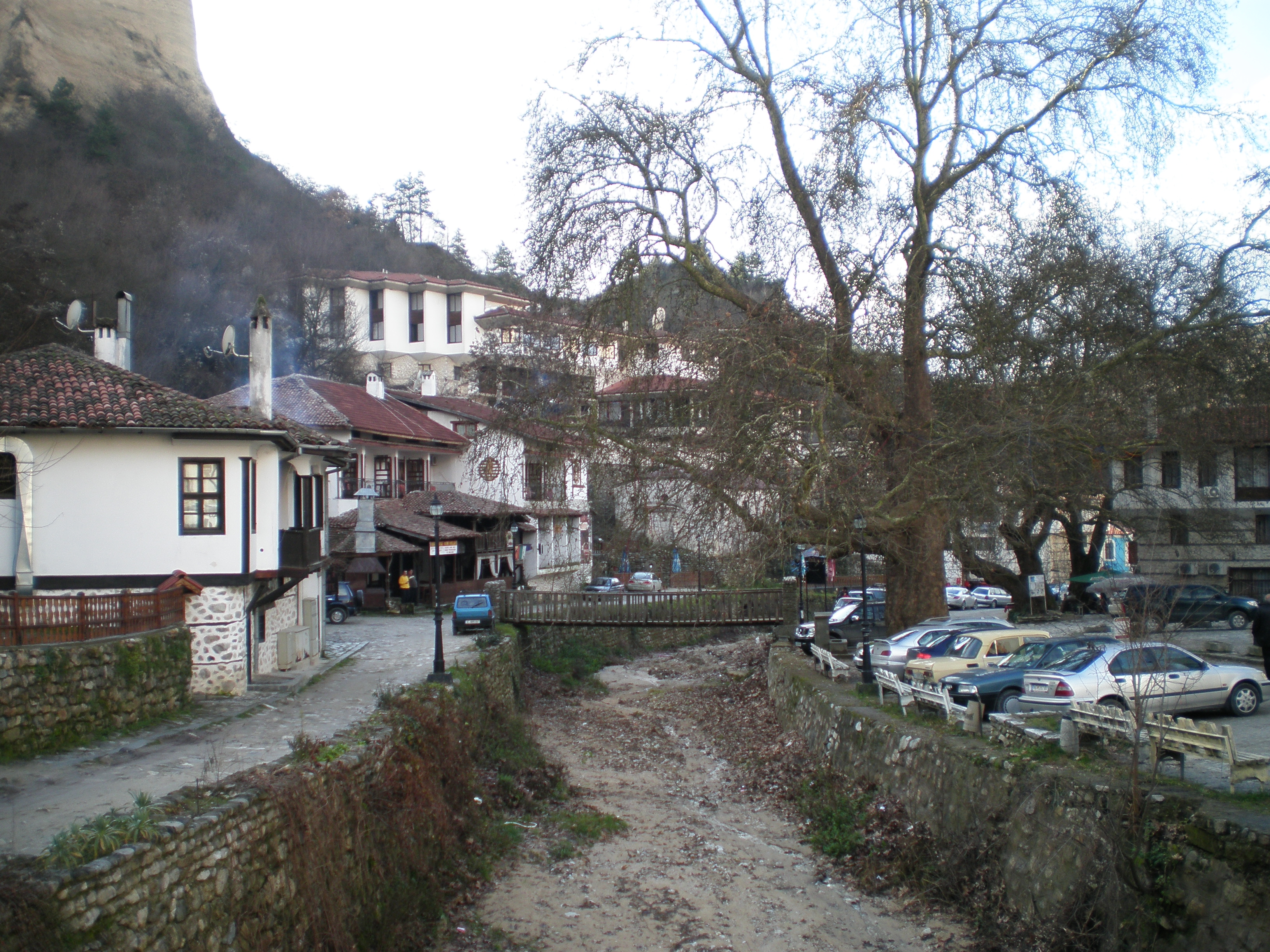
A little-known town in the hills outside of Sofia, only accessible by a winding single-lane paved road that carves its way up through the hills in a series of switchbacks, or by hiking up a similar type of trail through the forest, Milanovo is one of those little places you only uncover by going off the beaten path. I was reminded the other day when I was reading some posts from over at Wandering Earl’s website of the beauty of Bulgaria, and some of the little things I miss after being away for a few years. Read More

Melnik, Bulgaria

Five Reasons to Live Abroad

Posted by | Expat Lifestyle, Freedom, Live Like a Local, Quality of Life, Traveling Tips | 19 Comments

For many people, the glamour of travel is that it is the chance to explore new destinations and experience new cultures and places that allow them the opportunity to step out of the 9-to-5 routine work grind and enjoy a little downtime for a couple of weeks. Some prefer hiking mountains and volcanoes, while others enjoy lounging on the beach, kayaking down a river somewhere or enjoying a 5-star stay in a world-class destination like Paris or Rome.

For these folks, vacation is as close as they think they will ever come to experiencing “the good life”. But if you are one of those who, like me, want to enjoy “the good life” on a regular basis, there are numerous reasons why you choose to live in a foreign country and city for prolonged periods of time. It’s actually quite difficult to narrow the list down to just a few, but for the sake of space (and your eyes!) I have chosen what I think are the top five reasons people should choose to live abroad. Read More

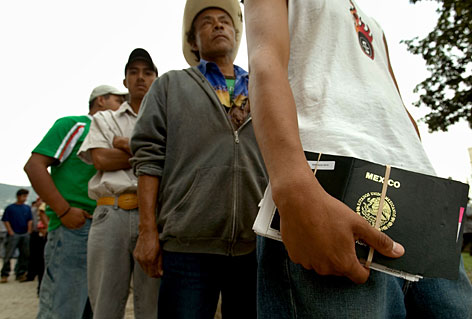
Immigration Line

Local Fixers and You – Tips for Full-Time Travel

Posted by | Live Like a Local, Mexico, Quality of Life, Traveling Tips | 2 Comments

While those of us who are traveling for a living often speak the language of the countries we are visiting, it’s not always a guarantee that where you end up will be somewhere where you can actually communicate fluently. And although you might only be on the ground a week or two, or maybe even as long as a few months on a passport stay, once you start to get into long-term immersion travel there are a variety of bureaucratic processes that can bog you down if you don’t speak the local lingo. Or, even in the case of those of us who speak the language, sometimes you just don’t want to be bothered with the hassle of doing paperwork when you can find someone else to do it for you.

Things like getting your residency paperwork filed with the local immigration office. Or getting papers notarized and translated. Or dealing with lawyers for a property purchase/sale. Every country does things differently, and as most of us have found out over the years, sometimes the only downside to living in a developing country is the bureaucracy.

Such as looking at the immigration website for your country and downloading the required papers, filling them out and then going to the local immigration office and talking to the individual at the information desk only to find out that the papers on the website aren’t up to date and you need to fill out these papers instead and supply copies of these two pages of your passport along with a translated copy of this document and copies of these bank statements.

So you take the next day to follow the instructions, come back to the office only to find another employee working…who tells you that you didn’t actually need that copy there but actually this copy here and you need two more copies of that document and this one has to be notarized but only after it has been translated and you have to be back between the hours of two and four in the afternoon only there’s a line halfway around the block to try and get it when you return so you say screw it and come back the next day and submit all your paperwork, finally, and they tell you to check the website in two weeks for an update but when you do nothing updates and you wait and you wait and five weeks later you finally decide to go to the office to find out what’s up only to find out that your paperwork has been there the entire time but no one ever entered it into the website to let you know to come pick it up, but before you can pick it up they have changed the laws and now you need these other documents filled out and notarized and…

Having done my own visa paperwork in three countries now (Bulgaria, Colombia and Mexico), I can tell you from first-hand experience that the hassle — even if it’s only once a year — can be enough to drive a person mad. In Bulgaria, for example, I went through the residency visa process three times, and every year it was completely different…and I had to spend three to five days jumping through hoops that would change on a daily basis depending on who was working. It’s literally the only thing I dislike about living in developing countries: the lack of a streamlined filing system.

Which is where local fixers come into play.

Taking One For The Team

Think of a local fixer as a temporary personal assistant. They are going to do all the little things that you don’t want to be hassled with. Like running around to the notary and the translator and the lawyer and the copy shop and the immigration office for files and copies and forms. They speak the local language and can thus communicate on a far greater level than yourself (even if you do happen to speak fluently; they are native speakers after all), but there’s something else that a local fixer has which is greater than their communication skills: Local know-how.

They know the way things work. They know who to talk to, how to grease the wheels, how to talk to the right people to get the desired result. They have built up connections with lawyers, immigration officials, bankers, notaries and beyond, which gives them a streamlined way of doing things that just isn’t available to you, even if you (like myself) happen to live in a city and speak the language reasonably well. They are often friends with the people working behind the counter at the offices and have built up a rapport with them over the years, which means your paperwork gets pushed to the front of the line rather than lingering away, lost in some bin.

But most importantly, you don’t have to waste your time doing the little things. Instead, you simply show up a couple of times, put your signature on some paperwork, pay the fixer his fee and go on about your business. Time = money, after all, and by using your time to be more productive and work on your income, you can pay a local fixer their minimal fee and let them handle the paperwork for you.

Above and Beyond

Local fixers are also often the difference between living as an expat in a specific city and being denied the right to live there and forced to leave if you have overstayed your passport stay or your visa. For the most part they are people working on the right side of the law helping to “fix” bureaucratic issues for non-native speakers of the host country language. They either work on commission, tips or referral fees (such as in the case of fixers for local immigration lawyers who get a kickback from the lawyer after they bring in a new client, who is you, the digital nomad and/or expat who needs help).

Contrary to what some people might think, fixers are not working illegally…for the most part. They do exist on both sides of the fence. However, if you do things by the book you will be working with the legal ones, the ones who are simply helping you navigate the minefield that is dealing with your visa in Japanese when you only speak English, for example.

Fixers can also take care of some shadier types of activities (disclaimer: I do not personally recommend these methods, merely mention them for your reading), such as working with a legitimate fixer to help you grease the local wheels with bribes and tips. This involves things such as paying off local officials so you don’t have to leave a country while your visa is processing or your status is changing (such as in Bulgaria). Or it could involve overstaying your visa while in a country like Russia and then having a local fixer bribe the local officials and help you navigate the loopholes to get your visa renewed and take care of your accidental hiccup.

There’s a lot of different ways fixers can help you above and beyond just visa issues. They are also extremely common in the journalism industry, as well as the travel documentary industry, helping people nail down their film and gear permits as well as access to press passes and the like. You can read more about them  and how to utilize them in your travels within The Expat Guidebook itself, but in the meantime you can watch our YouTube video on the subject as well.

This is an expanded version of a post originally written for The Expat Guidebook blog.

Don’t forget to sign up for our free newsletter for several-times-a-week, your-eyes-only travel and entrepreneur tips, plus receive a complimentary copy of our 85-page starter book on location independence and living abroad, 30 Ways in 30 Days.

With over 1,500 copies sold, our flagship 568-page eBook is what started it all. Learn how to travel the world like I do: without a budget, with no plans, funded completely by your website and online ventures.

The Expat GuidebookGet Your Copy Today!

Unplug from The System, cure yourself of The Greedy Bastard Syndrome, tap into your universal potential and create your own reality. Build a brand, travel the world and realize your cosmic consciousness.

Beyond Borders - The Social RevolutionGet Your Copy Today!

Time

Throw Away Your Watch

Posted by | Uncategorized | 2 Comments

We are, as a species, nothing more than physical manifestations of The Universe. We are the exact same as the ants of the Earth, the birds of the air, the fish of the sea, the plants that sink their roots down into the rich soil. A bird does not need a manager or a schedule or a spreadsheet to tell them when to lay eggs, when to fly, when to eat, when to hunt for food, when to mate. A bird does not need a schedule to order its life; it simply lives.

You and I are no different than the animals and the plants of our Home, Planet Earth. We do not need banks and credit and 40 hour work weeks and 15 minute breaks and 30 minute lunches and 2 weeks of paid vacation and four sick days and two personal days and a boss and a manager and a house payment and a car payment and beyond. We simply need communication and freedom of information to allow us to flourish in all the ways that The Universe has made available in its infinite possibilities. 

The Research

Psychological Review published a study based upon research performed in 1993 which showed that individuals who only work four-hour shifts are far more productive in comparison to those who work eight hours a day. People’s minds function better when they have a specific task at hand that they can focus on over short periods of time, rather than being required to multitask and spread their energy out over multiple hours and multiple job requirements.

There have been a variety of professionals who back up this claim, including best-selling authors such as Stephen King or Tim Ferris, the guy behind the Four-Hour Work Week book. According to Business Weekly“While completing a novel, famous authors tend to write only for 4 hours during the morning, leaving the rest of the day for rest and recuperation. Hence successful authors, who can control their work habits and are motivated to optimize their productivity, limit their most important intellectual activity to a fixed daily amount when working on projects requiring long periods of time to complete.”

Timekeeping

The basic concept is simple: the brain is most focused during short bursts of energy. And yet despite the research, and despite the fact that multiple cultures around the world have been employing this principle (albeit on a more physical, heat-and-bodily-safety level) for millennia, we continue to see countries such as the United States pressuring people into believing that eight hour work shifts are more productive, and that anyone who doesn’t work eight hours a day is somehow inherently lazy or unproductive. “Take a nap?” your boss asks with incredulity in their voice. “Out of the question. We have a schedule to maintain here, and a bottom line to push. You’re burning daylight, so get back to work!”

I did some initial research on this topic back in February of 2010 for one of my clients, where I took a look at the raw numbers and compared the United States to Italy in terms of productivity. You can read the whole post here, but the gist of the study (another person’s numbers, not my own) was that when you compare the average U.S. citizen compared to the average Italian citizen, the Italians are 76 percent more productive on a hours-worked-per-year basis…yet they are only working half the hours that regular U.S. citizens work! That’s right…half the hours. 20-25 hours per working week, and they are one of the cultures that employs the siesta as part of the regular routine…at least in the Mediterranean regions of Italy.

People who work fewer hours per day, on their own schedule from a position of well-rested happiness and enjoyment of their work, outperform 40 hour wage slaves every day of the week, in every way. 

The Cultural Point of View

The first thing I tell people when they arrive in Mexico to take part in one of our retreats (and it’s mentioned in both The Expat Guidebook as well as Beyond Borders) is “throw away your watch”, just as the title of this posts suggests. But it’s not just because they need to adopt a new point of view for the classes and the schedule we work on while living here in Mexico. It’s also part of the culture down here: people just simply don’t pay attention to time in the way that Westerners do.

When a dinner party is set to start at 9 p.m., the vast majority of the guests don’t start arriving until 10 or 10:30. If a person says they will be there in an hour, it could be two or three hours before they actually arrive. The same goes for Colombia, Bulgaria, Serbia, Macedonia and dozens of other countries I’ve traveled to and lived in since I started traveling in 1999. Only in The West is there an addiction to time, an addiction to schedules and routine and structure and rules, rules, rules, rules.

A watch will only cause you frustration in Mexico and other countries that operate on a take-life-as-it-comes pacing. You will constantly be glancing at it and cursing the fact that everyone around you is “late”. But late according to whom? You, the “Master of The Universe”, the “frantic Westerner”? Or late according to your watch, which is a simple device that shows you a set of arbitrary numbers that have nothing to do with life or love or passion and evolution and universal understanding.

Cast Off Your Chains

Because you aren’t going to need them where you’re going. The land of never-ending sunsets, endless sunrises, countless days spent wandering the lost paths of adventure in your host country…time simply fades away once you leave the rat race of the Western world and corporate greed behind. When you start traveling the world and exploring other countries you find a truth buried behind the propaganda the Western world tries to spread about them. These are simple human beings doing the same things that human beings all over the planet do: live life. They just do it at a different pace.

One of my favorites is when Westerners try to look at countries where the siesta still functions and term those people unproductive or lazy. In whose eyes? For those of you who have read any of my previous materials you know that I actively preach the siesta concept, or only working a few hours per day and making sure to have plenty of rest including a nap in the afternoon.

The reasons for this are numerous, but the point is that just because people around the world enjoy a relaxed pace and naps in the afternoon doesn’t mean they are lazy. They just don’t rely on Americanized time where everything is broken down into 8 hour work shifts with 30 minute lunch breaks and a 15 minute break in the morning and another one in the afternoon and overtime and double pay and holiday pay and structure, structure, rules, rules.

Take Colombia, for example. Most people in the business world work 8 to 12, break until 2, then work 2 until 6. And there, just like in Bulgaria or Mexico or Uruguay or Italy or Turkey or numerous other countries, if someone says they are going to be there in 30 minutes it might actually be more like an hour and a half. Punctuality is not a concern in most countries outside of the U.S. and the U.K., and that’s something which is very difficult for some people to break away from. It’s one of the leading concerns for first-time expats and digital nomads haven’t yet learned to disconnect.

The Disconnect

If you’ve been on the road for any length of time this probably doesn’t affect you anymore. One of the nice things about getting out of the “system” or unplugging from the Matrix is that you don’t need to adhere to the breakneck pace of life anymore. You can take things slowly, one day at a time, and you don’t have to worry about a never-ending tide of stress-inducing factors.

It’s just a shrug-your-shoulders, let-the-day-pass-as-it-will attitude that could be best described as Bohemian if you had to put a term to it. It’s the kind of mentality that says it doesn’t really matter if it’s nine in the morning….I wouldn’t mind a couple of mojitos and a joint while lying on the beach or going surfing or cenote diving. Or at two in the afternoon. Or whenever.

If you haven’t experienced this yet, let me tell you from personal experience: absolute creative and financial freedom is the ultimate experience. No screeching alarm clock telling you when to wake up, no boss leaning over your shoulder demanding productivity from you…there’s simply your own desires to create what you want, when you want, and then using those creations to fund your lifestyle. 

That’s not to say it doesn’t take hard work. If you want to get into movie-star shape you have to spend 3-4 hours a day, every day of the week, in the gym pushing your body to its absolute limits. The first few months are incredibly hard. Being your own boss has its own levels of difficulty attached. But once the routine is establish and you are living life on your own terms….

I put more money in the savings in my first three years of being a digital nomad than I did in the ten previous years when I was working in a trade that I grew up in and was earning $75+ an hour. And I did it all by working at my own pace. Drinking beer/wine/whiskey on the clock. Working out of Internet cafes. Without shaving. In the same clothing for two or three days at a time (yeah ok that’s probably not such a great thought, but hey, it’s the freedom to slack off while working that counts!). Having the ability to work on my projects when I wanted, not when someone was telling me to…no matter if it was in the middle of the night, the middle of the afternoon, on a beach, in my bed, on a plane, bus or just out at a restaurant.

So relax. Cast off those shackles. Shred that time-card in half and start living life the way you want and you’ll find yourself with all sorts of free time to just explore your creativity and true human potential…once you throw away your watch and learn to stop worrying about some silly little numbers.

The above excerpts were pulled from the pages of The Expat Guidebook, the associated blog, and Beyond Borders – The Social Revolution

Don’t forget to sign up for our free newsletter for several-times-a-week, your-eyes-only travel and entrepreneur tips, plus receive a complimentary copy of our 85-page starter book on location independence and living abroad, 30 Ways in 30 Days.

With over 1,500 copies sold, our flagship 568-page eBook is what started it all. Learn how to travel the world like I do: without a budget, with no plans, funded completely by your website and online ventures.

The Expat GuidebookGet Your Copy Today!

Unplug from The System, cure yourself of The Greedy Bastard Syndrome, tap into your universal potential and create your own reality. Build a brand, travel the world and realize your cosmic consciousness.

Beyond Borders - The Social RevolutionGet Your Copy Today!

Market 23, Cancun

How To Save More than $5,000 A Year On Groceries While Living Abroad

Posted by | Live Like a Local, Quality of Life, Traveling Tips | 2 Comments

For those of you who are regular readers, the lowered costs of living in another country is a familiar topic. For those of you who are new to the scene, this might be something you aren’t aware of simply because you’ve never been informed of just how much money you can save by living abroad. But when you start spending more time in developing countries, the amount of money you can put back into your pocket is staggering in its scope.

Such as picking up produce at local markets as well as saving your grocery shopping for market days when you can pick up produce and fruits for a fraction of their normal cost…which means you can walk away with savings that are worth hundreds of dollars per month and thousands of dollars per year.

In the accompanying video you’ll see me give you a basic breakdown of the type of savings I enjoy by shopping at the local level while living abroad as an expat. While the average grocery bill for an American is $6,500 per year (according to the Department of Labor as reported by TLC ), I spend a mere $1,000 per year in comparison. That’s $5,500 savings per year, and yet I’m eating the exact same foods that I was when I was living in Colorado…it’s just that I’m purchasing things in a country where I’m not charged an arm and a leg for simple groceries.

Think about that for a minute. Let it sink in. I know it’s hard to imagine, because you (readers in The West/U.S./U.K.) are so used to paying such obscenely high prices for your groceries that it must sound like an impossibility to be able to save over five thousand dollars on your annual grocery bill. And remember, these numbers are from the U.S. government itself…and they only represent the grocery bill for a single, average, median-cost-of-living American. The grocery bill for couples double…and when you add kids into the equation you can see that number quadruple or beyond. (Assuming average, middle-class Americans. Remember that these numbers are the “average”; some people spend more, some people spend less, through coupons and smart shopping).

Now think about this: if the average household (family of four) is spending $6,500 per year, per adult, that’s $13,000 per year. Throw a couple of kids into the mix and you can assume a minimum of $20,000 per year on food alone. Now, compare that to living in a place like Mexico City or Cancun, where two adults can eat like kings on a mere $2,000 a year. Add a couple of kids into the mix and you are talking about around $4,000 a year.

That’s basic, grade-school math that anyone can see. $20,000 a year versus $4,000 a year for a family of four. For two adults it’s $2,000 per year versus $13,000 per year. For a single individual, it’s $1,000 per year versus $6,500 per year. The savings by living like a local are literally thousands of dollars a year back into your pocket.

Don’t believe me? Just check out the following video for the most basic type of evidence. I’m only going into tomatoes, mangos, papayas and onions…when you utilize local prices and market days you can get all of your produce for pennies (I mention broccoli in the video; you can find it as little as 6 pesos per kilo), you can buy whole chickens at the store for a mere one dollar (stocking up on 10 or 15 of them and sticking them in your freezer), you can go to the local fish market and get fresh fish for pennies per kilo…it’s absolutely mind-boggling the amount of money you can save by living like a local in foreign countries around the world.

Forget only saving pennies or a few dollars here and there by clipping coupons. You can save tens of thousands of dollars on your family’s grocery bill simply by choosing to live in another country and utilize the basic principles of living like a local.

And it’s not just Mexico where you find these local markets. While farmer’s markets might be a rarity in the U.S., and to a lesser degree in the U.K. and other Western countries where the almighty Supermarket Chains rule the world with their barcodes and government-affiliated buildings, in most developing countries they are the preferred way to shop. When I was living in Bulgaria it was the Women’s Market in Sofia, and the same while I was living in Bogota, Colombia. And visiting Greece, Italy, Turkey, Romania, Serbia, Macedonia and the variety of other countries in Eastern Europe and the Mediterranean.

And let’s not even start with the gimmick that is “organic” food and produce. When you are shopping at the small, local markets you are getting farm-fresh produce and whole foods that are organic and pure simply by the very nature of the fact that the small farmers can’t afford to use the expensive pesticides and “government approved” fertilizes, so they are growing things as they have always been grown: in the dirt, using nothing more than sweat combined with Mother Nature’s guidance.

For example, in a recent trip to Chable, Mexico, the locals all have their own gardens as well as their own chickens, pigs and cattle. They grow their own produce and feed their pigs, chickens and cattle the same food they themselves are eating and growing in their gardens…and they aren’t using pesticides or chemicals. They can’t afford them! Instead, they are growing things straight out of the ground and feeding their animals the scraps from the table…which in turn ensures their meat is pure and free from antibiotics and other chemicals that mass-produced food contains.

We watched a neighbor kill three chickens for dinner, and when we picked up 15 fish for the family to eat for dinner in the evening it was freshly caught from the Usumacinta River. The neighbors chickens were running around the yard behind the house in the morning. The tamales we had for breakfast were made with fresh-ground corn pulled straight from the merchant’s back yard. Our cucumbers and lettuce and tomatoes for the salad were all farm-fresh and grown by the neighbors and sold at the local market. And for pennies in comparison to what you would pay in the U.S. and other Western countries for “organic” produce.

*The numbers presented represent total food costs per year, not merely groceries. The DOL statistics also take into consideration eating out. Those families or individuals who prepare their own meals rather than eating out spend considerably less. Also bear in mind that this post is written from a U.S. perspective. Those people already living here in Mexico or other countries where the cost of food is at the local level already know this fact!

If you’d like more information on how to get the most out of your hard-earned dollars or euros while living abroad, The Expat Guidebook details how I went from $3,000 a month in bills to less than $650 a month and how I live like a king in developing countries around the world. The above post is an excerpt from a larger section detailing local markets and negotiation for lowered costs of living.

Don’t forget to sign up for our free newsletter for several-times-a-week, your-eyes-only travel and entrepreneur tips, plus receive a complimentary copy of our 85-page starter book on location independence and living abroad, 30 Ways in 30 Days.

With over 1,500 copies sold, our flagship 568-page eBook is what started it all. Learn how to travel the world like I do: without a budget, with no plans, funded completely by your website and online ventures.

The Expat GuidebookGet Your Copy Today!

Unplug from The System, cure yourself of The Greedy Bastard Syndrome, tap into your universal potential and create your own reality. Build a brand, travel the world and realize your cosmic consciousness.

Beyond Borders - The Social RevolutionGet Your Copy Today!